Hoshitoge Rice Terraces 2026: Sunrise, Seasons & Access
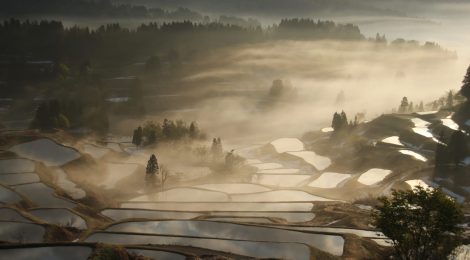
Hoshitoge Rice Terraces are a patchwork of curving, water-filled paddies in the mountain villages of Tokamachi, Niigata. At dawn, reflections and drifting valley mist sometimes turn the hillside into one of the most atmospheric landscapes in Japan. Yet this is no ornamental park: the small plots are actively farmed, paths belong to a working agricultural environment, and winter snow can shut access completely. The best visit combines patience for the weather with respect for local residents.
Why the Hoshitoge rice terraces are special
About 200 individual paddies create the layered vista often featured in Niigata tourism imagery. The plots follow natural contours rather than forming neat rectangles, which is why the landscape looks almost sculpted. Hoshitoge is part of the wider Echigo-Matsudai rice-terrace region; nearby villages maintain their own distinct landscapes. It is an example of human care and natural topography functioning together, not a field set aside solely for tourism. Learn more about the area’s community and art traditions in our Tokamachi guide and the Echigo-Tsumari Art Field.
Best time to visit Hoshitoge in 2026 and 2027
Spring mirror reflections: after snowmelt to June
The most sought-after photographs come when the rice paddies hold water. The local tourist association identifies spring—from snowmelt through roughly June—as one of two main reflection seasons. May can be magical when planting begins, but do not assume every field is flooded on a particular date; farmers follow the weather and their own schedules. Arrive before dawn only if access roads have reopened and conditions are safe. Golden Week timing may coincide with lingering snow on approach roads.
Autumn water mirrors: mid-October to first snowfall
A second reflection season occurs from approximately mid-October until the first snowfall, according to the official tourism page. Cooler nights can create mist above the valley, but sunrise mist is a possibility, never a guarantee. In autumn, pale grasses and gold foliage surround the paddies. Unlike the brilliant colors of Shiroyone Senmaida on the Noto Peninsula, which faces the sea, Hoshitoge’s distinctive feature is its inland hill-and-valley setting.
Summer greenery and the winter closure
In summer the flooded mirrors become green rice plants; by harvest time the terrace colors turn golden. Winter is very different from the snowy images you may find online: the tourist association explicitly warns that the parking lot and observation area are inaccessible because roads are not cleared. It advises avoiding the village during snow conditions, generally from mid-November through late April. Do not drive beyond barriers or walk through deep snow to reproduce an online image. For an accessible Niigata winter experience, consider Echigo-Yuzawa ski resorts or Yuzawa Kogen Ski Resort instead.
How to reach the viewpoint
Train and taxi from Tokyo via Echigo-Yuzawa
From Tokyo, take the Joetsu Shinkansen to Echigo-Yuzawa, transfer to the Hokuhoku Line toward Matsudai and continue by taxi. The Tokamachi Tourism Association estimates about 20 minutes by taxi from Matsudai Station. Arrange the return journey before leaving the station, especially for sunrise: rural taxis are not always waiting at the viewpoint. Train and taxi schedules are more important here than distance on a map.
Rental car, navigation and parking
Driving offers flexibility for sunrise, but roads are winding and can be icy even outside the deepest winter period. The tourism office lists parking for approximately 20 vehicles and car-navigation map code 298 138 507. Park only in the signed area, leave lanes clear for farm vehicles and avoid idling beside houses. If roads are blocked or the car park is full, turn back. A visit can be combined with Echigo-Yuzawa Onsen as an overnight base, or Niigata Prefectural Museum of Modern Art in Nagaoka on a broader route.
Can you cycle from Tokamachi?
The climb into the hills makes this an ambitious cycling excursion rather than a short flat ride. E-bikes may help but do not solve traffic and weather issues, and bicycles are not a substitute for checking winter restrictions. Unless you are a strong cyclist familiar with Japanese rural roads, the train-plus-taxi approach is easier.
Photography guide: get beautiful images without trespassing
Arrive early, but put safety first
Morning light creates gentle colors and may reveal a sea of mist, while mid-morning makes the terrace geometry easier to see. Bring a stable camera setup where permitted, warm layers, rain protection and a headlamp if approaching at twilight. A moderate telephoto lens can isolate the curving plots without walking closer to fields. Photographers chasing other distinctive Japanese landscapes might also enjoy Yusumizugaura’s coastal terraces and Oura Terraced Rice Fields, each in a different region.
Private land and community etiquette
The paddies are private agricultural land. Never step into a field for a better reflection, pick plants, leave litter or walk on aging bunds: the tourism association warns that some footpaths can collapse. Keep conversations quiet at dawn, avoid blocking residents’ driveways and give way to farm machinery. Aerial photography should follow Japanese aviation rules and local restrictions; do not presume a drone is welcome over someone’s home or crops.
What else to see in Niigata
Tokamachi’s surrounding art villages reward a longer trip. Explore the rural installations described in our Echigo-Tsumari guide and look for the seasonal Tokamachi Snow Festival if traveling in winter. In Niigata City, Niigata City Aquarium offers a rainy-day family option, while the Niigata Science Museum and Niigata Senbei Okoku showcase different aspects of local culture. Food enthusiasts can investigate the Niigata Sake Fair when the event operates. To understand rice-growing as a heritage practice, see the Otaue Rice Planting Festival on a separate Japan itinerary.
A practical one-day Hoshitoge plan
Stay the previous night in Matsudai, Tokamachi or an appropriate nearby base if you want sunrise; do not count on an early train reaching the terraces in time. Check the forecast and local road notices the night before. Arrive in the designated viewing area, spend one to two hours watching light change and return to town for breakfast. Continue to a local art stop in daylight. In poor conditions, switch to museums rather than forcing an unsafe hillside excursion.
Hoshitoge Rice Terraces FAQ
Is there an entrance fee?
The roadside viewing area is normally free; transport, guides and special experiences cost extra. This is a working agricultural landscape, not a ticketed theme park.
Can I visit in December or January?
The local tourism office strongly advises against visits in the snow season because access roads and the viewing area are not cleared. Treat winter closures as a safety restriction, not merely a photographic inconvenience.
When do the water mirrors appear?
Typically after spring snowmelt through June and again from mid-October before snowfall. Exact water levels depend on farm work and weather.
Location and directions
Toge, Tokamachi, Niigata Prefecture, Japan. The viewing point is on working farmland; use the designated public viewpoint.
Open the location in Google Maps