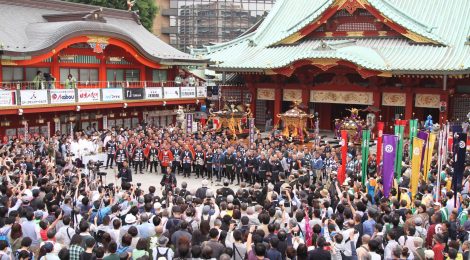
Kanda Matsuri 2027: Tokyo Festival Guide & Dates
Planning Kanda Matsuri in Tokyo? The first thing to know is the festival’s alternating calendar. In 2026, Kanda Myojin held the quieter kagematsuri observances without the famous citywide Shinkosai and neighborhood mikoshi procession. The next full Kanda Matsuri is expected in May 2027. As checked on 26 October 2026, the shrine has not published its final 2027 procession dates or route; dates displayed on some event aggregators are estimates and should not be used to book nonrefundable travel.
When the grand festival returns, ornate portable shrines, musicians, priests, community teams and traditional costumes animate streets around Kanda, Nihonbashi, Otemachi and Akihabara. This independent guide explains the festival’s history, what happens on the main days, how to choose a viewing area, where to stay and how to add it to a Tokyo itinerary. For the shrine itself, read our Kanda Myojin (Kanda-jinja Shrine) guide.
Kanda Festival 2027: dates, location and essential facts
- Japanese name: Kanda Matsuri (神田祭), one of Edo’s traditional great festivals.
- Main venue: Kanda Myojin Shrine, 2-16-2 Sotokanda, Chiyoda-ku, Tokyo.
- Next grand edition: May 2027, precise official program not yet confirmed as of 26 October 2026.
- 2026: off-year observances, without major Shinkosai or neighborhood mikoshi entry.
- Usual main festival pattern: Saturday Shinkosai procession, Sunday community mikoshi parade, with principal rites in mid-May. This describes established practice, not a confirmed 2027 timetable.
- Street viewing: normally free, with crowds and temporary traffic controls; separate performances may require tickets.
- Nearest convenient stations: JR Ochanomizu, Akihabara and Tokyo Metro Suehirocho, depending on your viewing location.
The organizer’s official Kanda Matsuri festival website currently retains the 2025 festival materials and explicitly says that 2026 had no Shinkosai or mikoshi parade. The Kanda Myojin shrine website is the priority for future announcements. The similarly alternating Sanno Matsuri is another important Tokyo tradition; its main shrine is Hie Shrine.
History: why Kanda Matsuri became a great Tokyo festival
Kanda Myojin traces its origins to the eighth century, but the elaborate Kanda Matsuri that visitors recognize today developed much later. In the Edo period, the Tokugawa shogunate endorsed grand processions through the castle town, and the celebration became associated with prosperity, urban identity and the neighborhood communities surrounding the shrine. The festival’s route and floats changed over the centuries as fire, urban development, overhead cables and modern streets transformed Tokyo.
The shrine venerates three deities: Onamuchi-no-mikoto (Daikoku), Sukunahikona-no-mikoto (Ebisu) and Taira no Masakado. In religious terms, the processions carry deities through the surrounding parishes to offer purification and blessings. The importance of the area becomes clearer alongside sites connected with the old city, such as Edo Castle and the modern Imperial Palace. For an entirely different perspective on Edo’s architectural heritage, our Edo–Tokyo Museum guide introduces the city’s changing urban story.
What happens at Kanda Matsuri?
Shinkosai: the principal shrine procession
In a full festival year, the Shinkosai is the long procession led by shrine representatives and traditional participants. Palanquins carrying the enshrined deities, musicians, ceremonial costumes and floats pass through the central Tokyo districts that historically belonged to the shrine’s parish. The previous grand festival’s official program described a roughly 30-kilometer route involving Kanda, Otemachi, Nihonbashi and Akihabara. The sequence and timings should be checked against the 2027 organizer map when available, rather than copied mechanically from 2025.
What are the ceremonial palanquins?
These convey the shrine’s three deities as part of Shinto ritual. A portable shrine is called a mikoshi; the grand parade also features elaborate horen palanquins and traditional floats. They are more than decorations for photography: watch respectfully and leave ceremonial pathways clear.
Mikoshi Miyairi: neighborhood teams returning to the shrine
The Sunday in a grand edition is generally dedicated to numerous neighborhood teams bringing their mikoshi toward Kanda Myojin. The sound of cheering and rhythmic carrying contrasts with the more formal Shinkosai. Roads closest to the shrine may be especially crowded, so arriving early and choosing a side street rather than the main gate can provide a more comfortable experience. To understand another Tokyo neighborhood festival with a different shrine and program, explore Sanja Matsuri in Asakusa.
Reitaisai and related religious ceremonies
Religious rites centered on the shrine remain important even in off years. Some programs may include tea offerings, music or Noh-related performances. These components are distinct from the large street parades and may have separate admission or reservation procedures. The shrine’s historic ritual context is worth appreciating even when the large procession is not operating.
Where to watch the Kanda Festival in Tokyo
At Kanda Myojin Shrine
The approach and shrine grounds are central to the ceremony. They offer dramatic sights but are often very congested around a mikoshi return. Be ready for crowd management and restrictions on standing in access paths. The nearby Akihabara district is an easy pre- or post-festival stop, with arcades, electronics shops and cafés, although certain streets may be closed to traffic during festival operations.
In Nihonbashi and Otemachi
Parts of the longer procession traditionally move through broad business-district streets, offering different photographic angles and a less compressed atmosphere than the narrow approach to the shrine. Consider how the route passes through central Tokyo rather than trying to watch the entire event at one fixed point. The Tokyo Station area and Tokyo International Forum are useful landmarks for exploring the Marunouchi side of central Tokyo on a separate walk.
Near Ochanomizu and neighboring streets
The area west of Akihabara has approaches to the shrine and convenient rail access. Find a safe legal viewing position away from emergency paths, shop entrances and the carrying teams. When crowds feel overwhelming, visit on an ordinary day instead and combine the shrine with the nearby Yushima Tenmangu Shrine or quiet lanes around Yanesen’s Yanaka, Nezu and Sendagi neighborhoods.
How to reach Kanda Myojin
From JR Ochanomizu Station, the shrine is roughly a five-minute walk depending on your exit; Akihabara and Suehirocho stations are also convenient. These are ordinary non-festival walking estimates, and diversions are likely during major processions. Use trains rather than taxis near closed streets, and do not rely on a normal road-driving route during the full event. After the festival, a quieter visit to the Imperial Palace Outer Gardens can provide breathing room away from crowded intersections.
For a fuller day centered on Japanese history and art, combine Kanda with the Tokyo National Museum in Ueno, where you can explore a more formal collection of national heritage. The Ueno neighborhood guide covers the broader district; it is better visited as a separate stop than added to a fast-moving procession chase.
Practical advice for international visitors
- Confirm dates before booking: treat 2027 event dates as provisional until the shrine publishes its own schedule.
- Arrive early: central routes and shrine approaches become busy and mobile reception may be slower in dense crowds.
- Travel light: large bags or strollers are difficult in packed viewing spots. Keep children close and choose a meeting point.
- Respect the religious function: do not obstruct carriers, touch ceremonial objects or enter roped-off areas.
- Bring weather protection: mid-May Tokyo can be warm, wet or humid. Carry water and follow police directions.
- Bring a translation app: exact route changes and announcements may be given in Japanese.
- Do not plan to drive: use rail, and check station exits if barriers or crowd-flow directions are in place.
A festival-focused Tokyo itinerary
Day one: the procession and old Edo neighborhoods
In a confirmed grand festival year, choose a single suitable Shinkosai viewing point and explore its surroundings before or after the route passes. You might visit the Kanda Shrine, browse Akihabara and continue toward the old city center on foot or by train. The following morning can be used for the mikoshi festivities once the organizer confirms the timetable.
Day two: additional history and culture
When you have finished with the busiest festival crowds, head to Asakusa or explore the shopping street of Kappabashi Kitchen Town to see another side of Tokyo’s everyday culture. For a slower-paced contrast, plan a separate afternoon among the shops and cafés of Shimokitazawa; it is elsewhere in the city and should not be confused with the Kanda festival’s parade route.
Frequently asked questions
Is Kanda Matsuri happening in 2026?
The major procession did not run in 2026, an off-year kagematsuri. Limited shrine observances took place in May. The next main edition is scheduled for May 2027.
What are the exact 2027 Kanda Matsuri dates?
As of 26 October 2026, the organizer had not published a final 2027 schedule. Some websites estimate a particular weekend, but travelers should wait for the official announcement before making date-dependent bookings.
Is the festival free?
Public street-procession viewing is generally free. Special performances, reserved participation and other independent events can have ticket requirements.
How long does the festival last?
The principal religious events occupy several days, with the busiest street processions normally occurring during one weekend of the grand edition.
Can tourists take part in carrying a mikoshi?
Participation is normally organized through local community and shrine groups; visitors should not assume they may join a carrying team without prior permission.
Address and Google Maps directions
Kanda Myojin Shrine, 2-16-2 Sotokanda, Chiyoda-ku, Tokyo, Japan. Street events extend across nearby neighborhoods; the directions below are to the original festival’s shrine site, not a guaranteed procession viewing location.
Official references and further reading
- Kanda Matsuri official festival website — off-year notice
- Kanda Matsuri official history
- Kanda Matsuri Shinkosai — official account of procession and 2025 route
- Kanda Myojin Shrine — current announcements
- Tokyo regional tourism listing — 2026 off-year and 2027 cycle
Originally posted 2025-11-23 23:11:31.