Nagahama Japan Travel Guide 2026: Kurokabe, Castle & Lake Biwa
Nagahama is a remarkably walkable historic town on the northeastern shore of Japan’s Lake Biwa, the country’s largest freshwater lake. It combines merchant-era streets, fine glass craft, the legacy of Toyotomi Hideyoshi and a preserved railway station from the 1880s. Unlike Kyoto’s busiest sightseeing corridors, much of Nagahama’s old town can be explored at an unhurried pace in a half or full day.
The old town’s heart is Kurokabe Square, but that is only one part of the experience. Travelers can visit Nagahama Castle History Museum, explore festival floats at the Hikiyama Museum, enjoy lakeside walks or take a separate cruise to sacred Chikubushima Island. The town is especially convenient when staying around Kyoto, Osaka, Maibara or northern Shiga.
This 2026 guide updates the original article with verified opening hours, important ticket differences, train access and seasonal schedules. It also clarifies that the preserved 1882 station building is at Nagahama Railroad Square, not inside Kurokabe Square.
Nagahama at a glance: where it is and why visit
- Where: Nagahama City, northern Shiga Prefecture, Kansai region.
- Closest main station: JR Nagahama on the Hokuriku/Biwako Line.
- Best for: historic townhouses, handicrafts, museums, food and Lake Biwa scenery.
- Time needed: 4–6 hours for the town, or a full day with museums; add more time for Chikubushima.
- Main highlights: Kurokabe Square, Nagahama Castle, Railroad Square and the Hikiyama Museum.
- Seasonal event: Nagahama Hikiyama Festival, principally in April, subject to annually announced arrangements.
- Day-trip potential: practical by rail from Kyoto or Osaka, although connections depend on the service.
For a different lakeside perspective, see our guides to Biwako Valley and Chikubushima Island. Both are in the wider Lake Biwa region but require their own transport rather than an old-town walking ticket.
1. Explore Kurokabe Square and its glass workshops
Kurokabe Square is the central old-town shopping district around the intersection of the former Hokkoku Kaido road and Otemondori Street. The area grew into a destination known for glasswork, independent shops, sweets and repurposed historical buildings. Its dark-painted buildings give the district its name, and the narrow streets reward anyone willing to slow down and look at small architectural details.
2026 visiting hours and shop etiquette
Shiga’s official tourism bureau currently lists general Kurokabe visitor hours as 10 a.m.–6 p.m. from April through October and 10 a.m.–5 p.m. from November through March, with end-of-year exceptions. These are broad area hours, not a guarantee every workshop or café opens identically. The official Kurokabe address is 12-38 Motohama-cho, roughly five minutes on foot from JR Nagahama Station.
Start your visit around midmorning, when craft shops open, rather than arriving at dawn expecting glass demonstrations. Prices vary by piece and workshop; some activities require advance reservations or limit participants. Ask before photographing artisans at work, and treat delicate displays as commercial products, not a free interactive museum.
For a contrasting regional craft tradition, Shigaraki Ceramic Cultural Park focuses on pottery in another part of Shiga, while Kyoto International Manga Museum presents a more contemporary art form in central Kyoto.
2. Visit Nagahama Castle and the History Museum
Nagahama became important under the military leader Toyotomi Hideyoshi during the late sixteenth century. The original castle was dismantled centuries ago; today’s castle-shaped building is a modern reconstruction containing a historical museum and an observation area overlooking the town and Lake Biwa. It should not be described as an intact, original medieval keep.
Castle museum ticket prices and hours
According to the museum’s official 2026 information, general visiting hours are 9 a.m.–5 p.m., last entry 4:30 p.m. The museum is usually closed Mondays (or the following weekday when Monday is a holiday), plus a year-end closure from December 27 through January 2. General admission is ¥500 for high-school age and older and ¥200 for elementary and junior-high students. A 2026 special exhibition temporarily raised the adult rate during July 25–September 27; that specific period has now passed, so check the live event calendar before treating an old promotional rate as normal.
The museum sits at 10-10 Koencho, about seven minutes on foot from Nagahama Station. Volunteers sometimes provide guided explanations on weekends and holidays. The museum prohibits photography of its exhibits unless a specific exception is announced. The official price and closure details appear at Nagahama Castle History Museum’s admission page.
Compare castle history across Japan
Nagahama’s reconstructed keep differs from the preserved defenses at Hikone Castle nearby and the heritage experiences at Himeji Castle, Gifu Castle and Osaka Castle. Those are independent destinations, not additions to a Nagahama museum ticket.
3. See Japan’s oldest surviving station building
Nagahama Railroad Square preserves the first Nagahama railway station, completed in 1882. This is recognized as Japan’s oldest surviving station building. The building is not the modern train station where passengers arrive today. It belongs to a small railway heritage complex that also displays equipment and historic locomotives, making it an excellent stop for travelers interested in transport and industrial history.
Railroad Square hours and collection
Official Shiga tourism information lists hours of 9:30 a.m.–5 p.m., last entry 4:30 p.m. and the standard ticket at approximately ¥500 for adults and ¥200 for schoolchildren; a year-end closure normally applies. Find it at 1-41 Kitafuna-cho, only a few minutes on foot from modern Nagahama Station. Visitors can learn about early Japanese rail travel and historic locomotives, but hands-on access to any particular locomotive cab depends on current museum rules.
For a more extensive look at Japanese railway engineering, Kyoto Railway Museum is a useful comparison, while travelers passing through the region can also consult Kyoto Station and Osaka Station for their separate rail connections.
4. Learn about the Nagahama Hikiyama Festival
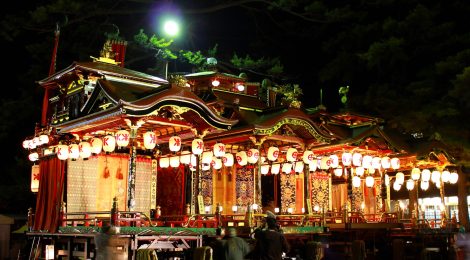
The Nagahama Hikiyama Matsuri is a centuries-old April celebration involving ornate wooden floats and children’s kabuki performances. These elaborate floats are sometimes described as moving museums because their craftwork and performance traditions bring the town’s history onto its streets. It is related to the broader UNESCO-recognized Japanese float-festival traditions, but the local festival has its own calendar, ceremonial preparations and community roles.
Visit Hikiyama Museum outside the festival period
The Hikiyama Museum at 14-8 Motohama-cho displays festival floats and preserves the related culture through exhibits. The official operating hours are 9 a.m.–5 p.m., last entry 4:30 p.m.; it is generally closed Mondays and over the New Year period. The current museum lists ¥600 admission for adults and ¥300 for children. Check temporary exhibition and local weather closures on the official Hikiyama Museum website.
Can you see the festival every day?
No. The museum can be visited during much of the year, but the actual procession and children’s kabuki program take place during the festival, normally around mid-April. The date and route for your intended year must be checked with the local tourism association. Do not build a spring trip around a guessed ceremony hour.
5. Take a boat to Chikubushima Island
Chikubushima is a sacred island in northern Lake Biwa with Hogonji Temple and Tsukubusuma Shrine. It is one of Nagahama’s most distinctive excursions, but the island is reached by scheduled boat, not a bridge or a short walk. The combination of temple steps, lake vistas and ferry travel deserves several hours and should not be squeezed into a brief lunch break.
2026 ferry tickets from Nagahama
For the Nagahama–Chikubushima round trip, the official Biwako Kisen operator currently lists ¥3,800 for adults and ¥1,900 for children on its 2026–27 timetable, with a separate Chikubushima island admission charge (¥600 adults, ¥300 children). Services can be more frequent on weekends and holidays and operate a reduced winter schedule, with weather-related changes. The company also offers an Imazu–Nagahama traverse route that is a different ticket. See Biwako Kisen’s Nagahama route timetable and read our Chikubushima destination guide before booking.
Anyone with limited mobility should note that sacred-site paths may include considerable steps. Dress respectfully around temples, do not disturb religious ceremonies, and return to the port well before the final departure.
6. Enjoy local food, markets and Lake Biwa views
The town’s shopping streets offer regional snacks, small cafés, sweets and seasonal produce. Lake Biwa fisheries are an important part of regional food culture, and dishes change with the catch and season. A stop at a local restaurant is a good chance to ask about lake fish, freshwater specialties or vegetarian options. Shops with glass displays and narrow historic entrances may have limited room for luggage and strollers.
Do not confuse Nagahama’s lakeside dining with Nagahama Fish Market in Fukuoka, a separately named place in another prefecture. For a calmer nature-focused day nearby, Biwako Valley has its own cable-car and weather restrictions, while Miidera Temple offers different religious heritage on the southern side of Lake Biwa.
How to get to Nagahama from Kyoto, Osaka and Tokyo
From Kyoto
Take the JR network toward Nagahama, either by a direct suitable special rapid service or by changing trains at Maibara, depending on the departure. A journey around an hour is possible on certain routes, but allow extra time for timetable changes. A Shinkansen to Maibara can be faster over part of the distance, though often less economical for a casual day trip.
From Osaka
Use the JR line toward Kyoto and the Lake Biwa/Hokuriku corridor. Some departures run through while others involve a change. Check the exact train because ordinary local trains and limited services do not have the same timing or ticket conditions.
From Tokyo
Shinkansen services to Maibara followed by a regional train are a straightforward choice. The transfer to Nagahama is short, but total door-to-door time is several hours. Avoid treating Nagahama as a casual two-hour round trip from Tokyo.
Getting around town
The castle, station museum and Kurokabe Square are close enough to link on foot. Chikubushima requires a boat and more planning. Visitors who want museums in other towns should treat Kyoto National Museum and Byodoin Temple as separate cultural stops on a longer Kansai route.
Best time to visit Nagahama
Spring: festival culture and cherry blossoms offer lively visits, but crowds and accommodation prices may rise. Summer: museums and lakeside outings work well, though humid heat and rain should influence walking time. Autumn: pleasant temperatures are often comfortable for exploring old town architecture. Winter: northern Shiga can experience cold weather and snow, affecting some transport or boat operations; Kurokabe shops also use shorter posted visitor hours.
For a multi-destination heritage itinerary, Nagahama can complement Hikone Castle, but it is best to reserve enough time rather than rushing both museums and Chikubushima into one short afternoon.
Suggested Nagahama itinerary: half day or full day
Four-hour walking route
Arrive at Nagahama Station and spend 45 minutes at Railroad Square. Walk into Kurokabe Square, browse workshops and have lunch. Continue toward Nagahama Castle for the historical exhibition and Lake Biwa views. Check individual museum closing times before reversing the route.
Full-day history and culture route
Use the morning for Nagahama Castle and Railroad Square, spend midday around the merchant streets and visit Hikiyama Museum in the afternoon. This leaves time for a relaxed meal and photography. The museum itinerary does not require a ferry.
Full-day island alternative
Book a morning Chikubushima cruise in advance, respect the operator’s island visit window, return to Nagahama and explore Kurokabe Square later. Weather cancellations can happen even when mainland attractions remain open, so retain a flexible plan.
If you are extending a culturally focused Japan trip, Takayama’s Sanmachi old town and Kyoto’s Higashi Honganji offer very different historic environments reached via separate regional transport.
Practical tips for international visitors
- Carry a payment card and some cash for small workshops or temple charges.
- Check Monday and New Year museum closures; the outdoor town may be accessible when individual museums are closed.
- Verify group reservations and any special exhibits before paying.
- Do not photograph protected museum exhibits where signage prohibits it.
- Book Chikubushima sailings against current weather, not a fixed old schedule.
- Respect working shops, narrow local streets, shrine etiquette and ferry loading instructions.
- For wheelchair and stroller users, verify museum access individually and consider island steps before boarding.
Frequently asked questions about Nagahama
Is Nagahama worth visiting from Kyoto?
Yes, especially for travelers interested in crafts, railway history and quieter traditional streets. Allow at least half a day.
How much is Nagahama Castle History Museum?
Its standard 2026 price is ¥500 for adults and ¥200 for elementary/junior-high students, with special exhibition exceptions and closures.
Where is the oldest railway station building?
At Nagahama Railroad Square, near today’s JR Nagahama Station. It was completed in 1882.
Is Kurokabe Square free to enter?
The public streets are generally free; purchases, workshops and individual attractions have separate fees.
Can I visit Chikubushima without a boat?
Normally no. It is an island reached by scheduled passenger boats, and a separate island entrance charge can apply.
Is Nagahama a good day trip in winter?
Yes for the town’s museums and food culture, but check shorter shop hours, occasional snow disruptions and the winter ferry schedule.
Address and map directions
Nagahama-shi, Shiga-ken, Japan.
Find Direction On Google Maps
Official references and further reading
- Japan National Tourism Organization: Nagahama overview
- Official Shiga Tourism: Kurokabe Square hours
- Nagahama Castle History Museum: opening, closures and fees
- Shiga Tourism: Nagahama Railroad Square
- Hikiyama Museum: festival history and admission
- Biwako Kisen: Chikubushima ferry fares and schedules