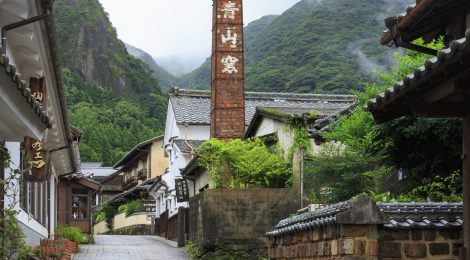
Okawachiyama Village
Okawachiyama—a hidden village where japan‘s imperial kilns were kept
Okawachiyama is a small village located in Imari, Saga Prefecture, Japan. It is known as the “Village of Secret Kilns” because it was the official kiln of the Nabeshima family of the Saga Domain from 1675 to 1871. During this period, Okawachiyama was a representative production center of porcelain, producing high-quality pottery for the Imperial Court, the shogunate, and various feudal lords.
The village of Okawachiyama is famous for its scenic beauty that resembles a landscape painting. The village is surrounded by mountains on three sides, creating a picturesque setting that is perfect for pottery production. The stands of brick chimneys and kilns in the village add to its charm and give it a unique atmosphere.
One of the main attractions in Okawachiyama is the Nabeshima Hanyo Park, which is located amid nature and has an impressive history. The park is a great place to learn about the history of Nabeshima ware, which is considered to be at the pinnacle of modern pottery in Japan. The present-day kilns in the village have inherited the advanced techniques cultivated in the old kilns, and they continue to produce high-quality Nabeshima-yaki pottery.
The production techniques at Okawachiyama were strictly controlled by the Nabeshima clan. They moved their kiln from Arita to the steep terrain of Okawachiyama to preserve their secretive techniques. To ensure the secrecy of their production methods, the clan set up a guard post at the entrance of the village to strictly control access to the kiln. This strict control allowed the clan to maintain the high quality of their pottery and prevent the leakage of their production techniques.
The pottery produced at Okawachiyama was mainly made for the Imperial Court, shoguns, and feudal lords. These pieces became known as Nabeshima-yaki and were highly regarded for their quality and craftsmanship. The Nabeshima clan paid the potters who worked at Okawachiyama and allowed them to use their family names, similar to the samurai. The artisans who worked at the kiln were taken care of by the clan, but their work was managed by a government office with strict rules in place.
A walk through Okawachiyama is like stepping back in time. The village has preserved its traditional pottery houses and has a unique atmosphere that reflects its history as a hidden kiln village. Visitors can see and enjoy ceramic pieces embedded everywhere in the village, including on bridges and signboards.
In addition to the kilns, there are other historical sites to explore in Okawachiyama. One notable site is the potters’ unmarked grave site, which has 880 unmarked graves dedicated to the Korean potters and other craftsmen who worked in the village. This site is a reminder of the diverse cultural influences that shaped the pottery production in Okawachiyama.
For those interested in ceramic art, the present-day kiln in Okawachiyama offers ceramic art experiences. Visitors can not only purchase Nabeshima-yaki porcelain but also try their hand at the pottery wheel and paint their own ceramics. This hands-on experience allows visitors to create their own original tableware, including cups and plates, and make unforgettable memories of their trip.
Overall, Okawachiyama is a hidden gem in Japan that showcases the rich history and craftsmanship of pottery production. Its scenic beauty, strict control of production techniques, and cultural significance make it a must-visit destination for pottery enthusiasts and history buffs alike.
Keywords: Culture, Pottery
Address And Maps Location:
Imari-shi, Saga-ken
Subscribe, follow @idbcpr and idbackpacker.com